
Quack Bag: Duck Mafia
NOODLE GAMES LIMITEDArcade
4.3303.00 Reviews
- Version
- 1.232.267
- Installs
- 1.00M
- Age Rating
- Everyone 10+
Screenshots


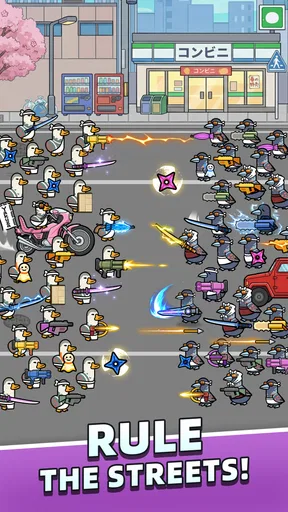

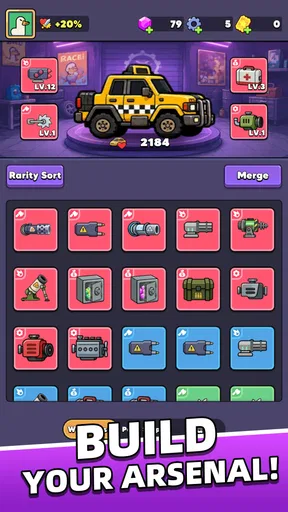


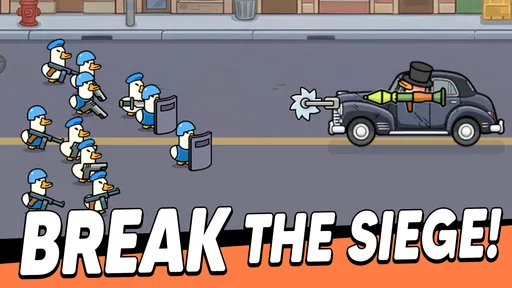
Our Review of Quack Bag: Duck Mafia
 Analysis by Appyee
Quack Bag: Duck Mafia is an arcade game built around a simple but surprisingly sticky loop: collect weapons, combine them, improve your bag, and take on street battles with a very unusual cast of ducks. I found it easy to understand within a few minutes, yet it still gave me enough small decisions to make each run feel more active than a basic tap-and-watch game.
The premise is deliberately playful. Instead of presenting a serious crime drama, it turns the idea of a mafia street fight into a colorful battle for better equipment. That contrast is the main appeal. The action is lighthearted, but the progression asks me to pay attention to what I keep, what I merge, and when I should stop chasing a short-term upgrade.
How the core loop feels in everyday play
My normal session starts with a quick check of the current bag. I look at the weapons already available, decide which pieces are worth combining, and then enter the next fight with a clearer plan. This preparation matters because the bag is not just an inventory screen; it is the place where much of the game’s decision-making happens.
The most satisfying moments come from turning several less useful items into something more effective. Merging gives the game its rhythm: gather, organize, combine, then test the result in battle. It is a familiar arcade structure, but the bag-focused design makes the player feel involved rather than simply waiting for a character to become stronger automatically.
I can imagine using it during a short break, while waiting for food, or during a commute when I want something that explains itself quickly. A session does not require the same concentration as a strategy game with a large map, and the duck theme keeps the mood relaxed. At the same time, the merge choices give me a reason to play another round instead of closing the game immediately.
The important habit is not to merge every item the moment it appears. I found it more useful to pause and consider whether a combination improves the next battle or merely clears space. That distinction becomes especially helpful when the bag starts to feel crowded. A tidy bag is convenient, but a slightly untidy one can preserve options for a stronger combination.
For a first-time player, I would recommend playing several rounds without trying to optimize everything. Learn how weapons appear, notice how the bag fills, and see which combinations make the biggest practical difference. Once that basic rhythm is comfortable, it becomes easier to recognize when a quick merge is sensible and when saving pieces is the better move.
The bag is the real planning screen
Many arcade games put nearly all of their attention on the fight itself. Here, I spent more time thinking before the battle than I expected. The bag creates a small puzzle inside the action game, and that puzzle rewards players who look ahead instead of reacting to every new object.
One useful approach is to reserve a little space for unexpected drops rather than filling every slot with immediate upgrades. This is not about making the screen perfectly organized. It is about keeping enough flexibility to respond when the next useful weapon appears. If I merge too aggressively, I may end up with a stronger item but fewer ways to adapt.
Another practical routine is to inspect the bag at the same point in every session. I prefer doing it before starting a new battle, not halfway through a hectic moment. That repeatable pause reduces rushed decisions and makes the game feel more controlled. Players who dislike inventory management may find this extra step annoying, but players who enjoy compact planning will probably appreciate it.
The developer, NOODLE GAMES LIMITED, has kept the presentation approachable. The game is categorized as an arcade title, and that description fits the quick feedback and straightforward controls. It does not ask me to learn a complicated control scheme before I can enjoy the main idea.
Settings and routine checks that improve comfort
Before settling into longer sessions, I would check the available in-game settings rather than assuming the default setup is ideal. The most useful settings are usually the ones that affect sound, notifications, or general presentation. I prefer lowering sound when playing in public and keeping the visual feedback clear enough to distinguish a useful merge from a routine action.
I also recommend checking the current version before blaming the game for an odd behavior. The version shown for this release is 1.182.260, and keeping the installation current is a sensible first step when an arcade game feels inconsistent. That does not change the basic strategy, but it can prevent a player from building habits around an outdated experience.
Because the minimum operating system is Android 6.0, the game is accessible to a wide range of Android devices. Still, compatibility on paper is not the same as comfort in practice. On an older phone, I would begin with shorter sessions and pay attention to touch response, heat, and battery use. A game can run successfully while still feeling less pleasant when the device is under strain.
My strongest settings-related advice is simple: remove distractions before trying to improve your play. Silence unrelated alerts, choose a comfortable sound level, and make sure the display is easy to read. Those small adjustments matter because the game’s decisions are quick. If the screen is cluttered by notifications or the sound is competing with your surroundings, it becomes harder to judge the timing of a merge or battle.
There is also a useful difference between playing casually and playing for progression. In a casual session, I can accept a messy bag and experiment. When I am trying to advance more efficiently, I use a repeatable setup: review the bag, identify the most likely useful merge, leave room for new items, then enter the fight. The game does not need a complicated ritual, but consistency makes its small choices easier to evaluate.
Faster patterns for players who want less hesitation
Experienced play is less about tapping faster and more about reducing unnecessary decisions. I try to identify a few reliable patterns instead of reconsidering every item from scratch. For example, I separate pieces that clearly belong to an immediate combination from pieces that might be valuable later. That simple mental division keeps me from repeatedly rearranging the entire bag.
A second pattern is to treat space as a resource. A powerful weapon is useful, but so is an open position that lets me accept a better opportunity. When the bag becomes crowded, I ask whether an item is helping the next battle or merely occupying attention. This question is more useful than chasing the biggest-looking object every time.
I also find it helpful to make one deliberate decision before each battle: am I playing for a safe improvement or a higher-risk combination? A safe improvement keeps the current setup dependable. A riskier choice may offer more progress but can leave the bag awkwardly arranged. Neither approach is always correct. The right choice depends on whether I am trying to recover from a weak run or capitalize on a strong one.
For a realistic everyday example, imagine having five minutes before a meeting. I would not begin by reorganizing everything or attempting an ambitious experiment. I would inspect the current bag, make the clearest useful merge, play a short battle, and stop. That workflow gives the session a natural endpoint and avoids the common problem of turning a small break into a longer commitment than intended.
When I have more time, I use a different rhythm. I allow one session to be exploratory, watching how various weapon combinations affect the flow. Then, in the next session, I repeat the choices that seemed dependable. This two-step approach is more informative than changing several things at once, because I can tell which decision actually helped.
The game’s free price makes experimentation easy to start, although in-app purchases range from $0.99 to $99.99 per item. I would approach those purchases carefully. The most useful question is not whether an item looks attractive, but whether it changes the way I want to play. If I enjoy solving the bag puzzle, buying progress too quickly could remove part of the satisfaction. If I mainly want quick battles, convenience may matter more, but I would still set a personal spending limit beforehand.
Where the design reaches its limits
The same simplicity that makes the game approachable can also become its main limitation. Players looking for deep tactical systems, a large narrative, or a highly competitive arcade experience may find the loop too narrow. The duck mafia theme is memorable, but the humor alone cannot replace variety for someone who needs constant new mechanics.
There is also a natural tension between merging and collecting. Combining items feels rewarding, but it can make the inventory less predictable. A player who prefers to keep every option available may dislike the pressure to consolidate. Conversely, a player who wants instant, uncomplicated action may see the bag management as an interruption rather than the game’s central feature.
I would also avoid treating every battle as a test of perfect skill. Some sessions are better used for learning the rhythm than for forcing an ideal result. If I become too focused on making every merge optimal, the arcade character starts to disappear and the game feels like a chore. The better balance is to use planning when it helps, then accept a less efficient choice when I simply want to play.
The age rating is Everyone 10+, which matches the cartoon presentation and playful conflict, but parents may still want to consider how their child responds to repeated battle themes and optional purchases. The game is free to start, yet the presence of purchasable items means I would review device purchase controls before handing it to a younger player.
Another trade-off is audience fit. Someone who enjoys merge mechanics but wants a calm, purely decorative experience may prefer a gentler puzzle game. Someone who wants direct reflex challenges may be happier with a traditional arcade title where success depends more on movement and timing. This game sits between those styles: it uses arcade energy, but much of the advantage comes from preparation.
The current audience gives it a solid public signal, with a 4.4 average from around 9K ratings and over 1M installs. I would read that as evidence that the accessible loop connects with many players, not as a promise that it will suit everyone. The smaller review count shown alongside those ratings is around 222 reviews, so I would still judge the game primarily by whether its merge-and-bag structure matches my own preferences.
Who should try it and who should skip it
I would recommend Quack Bag: Duck Mafia to players who like short arcade sessions with a light layer of inventory planning. It is especially suitable for someone who enjoys seeing a collection become stronger through combinations, but does not want to study a long tutorial or memorize a large rule set.
It is also a good choice for players who like repeatable habits. Reviewing the bag, preserving space, and choosing between a safe merge and a more ambitious one create enough structure to reward attention. These are small decisions, but they give the game more staying power than its playful presentation might suggest.
I would be more cautious about recommending it to someone who dislikes any form of resource organization. If sorting, merging, and deciding what to keep already sounds tiring, the central loop may feel like work. I would also point fans of story-heavy mobile games elsewhere, since the attraction here is the compact gameplay cycle rather than a detailed narrative.
For children or shared family devices, the Everyone 10+ rating is worth noting, as are the optional purchases. The free entry point is convenient, but I would still make sure purchase protections are active. That is not a criticism of the game’s core design; it is simply sensible preparation for any free mobile game with paid items.
My verdict after building a repeatable play style
What kept me interested was not the novelty of ducks alone. It was the way the bag turned a simple arcade battle into a series of small commitments. Every merge says something about what I believe the next encounter will require. That makes the game more thoughtful than its cheerful theme initially suggests.
My preferred method is to keep the opening rounds flexible, avoid automatic merging, and make one clear preparation pass before each battle. I use short sessions for safe upgrades and longer sessions for testing combinations. This approach keeps the game quick when I need it to be quick, while still leaving room for players who enjoy refining a routine.
The limits are clear: the loop may become repetitive for players who need constant novelty, and the purchase range means I would play with spending controls in mind. Even so, the free starting point, approachable arcade format, and distinctive duck-mafia setting make it easy to recommend as a low-commitment game to try.
My final recommendation is to treat it as a compact strategy-tinged arcade game, not as a full-scale action adventure. If you enjoy improving a bag, making quick trade-offs, and watching merged weapons carry you through another street battle, it has a pleasant rhythm. If you want pure reflex action or deep long-term systems, another arcade option may serve you better. For me, its best quality is the balance between a silly theme and genuinely useful preparation choices.
Verdict
Strengths of Quack Bag: Duck Mafia
- Charming duck-themed visuals give the game a distinctive personality.
- Short missions make it easy to enjoy during quick breaks.
- The mafia storyline adds humor and variety to the gameplay.
- Simple controls are approachable for casual players.
- Progression rewards regular play and encourages continued improvement.
Limitations of Quack Bag: Duck Mafia
- Some levels may feel repetitive after extended play sessions.
- Difficulty can become uneven as missions and challenges progress.
- Certain upgrades may require considerable time to unlock.
- The cartoon style may not appeal to players seeking realistic graphics.
- An internet connection may be needed for some features or rewards.
Similar Picks in This Category
View All
Subway Surfers
SYBO Games4.6

Stickman Party 234 MiniGames
PlayMax Game Studio4.6

Subway Princess Runner
Ivy4.4

Temple Run
Imangi Studios4.2

Zombie Tsunami
Mobigame SAS4.6

Stack Ball - Crash Platforms
CASUAL AZUR GAMES4.5
Frequently Asked Questions
What is Quack Bag: Duck Mafia?
Quack Bag: Duck Mafia is a casual mobile game built around a quirky duck-themed mafia setting. Players typically progress by collecting resources, upgrading characters or businesses, completing missions, and expanding their influence. Its humorous presentation and lighthearted criminal-world theme make it feel more playful than serious, while the progression systems are designed for short sessions as well as longer play periods.
Is Quack Bag: Duck Mafia free to download and play?
The game can generally be downloaded without an upfront purchase, but free access may be supported by advertising and optional in-app purchases. These purchases can include currency, boosters, cosmetic items, or progression-related advantages. You can usually play without spending money, although advancing faster or avoiding certain waiting periods may be easier for players who choose to watch ads or make optional purchases.
Does Quack Bag: Duck Mafia require an internet connection?
An internet connection may be needed for some features, including advertisements, account synchronization, special events, updates, and purchases. Basic parts of the game might remain accessible offline, but this can depend on the version and device. If you plan to play while traveling or without mobile data, it is best to test the game after installation rather than assuming every feature works offline.
Is Quack Bag: Duck Mafia suitable for children?
The colorful duck characters and cartoon-style presentation may appeal to younger players, but the mafia theme can include references to crime, conflict, weapons, or gambling-like mechanics depending on the game’s content. Parents should check the age rating, store description, advertising behavior, and in-app purchase settings before allowing children to play. Parental controls are recommended, especially on shared devices.
What devices support Quack Bag: Duck Mafia, and how much storage does it need?
Quack Bag: Duck Mafia is intended for supported Android and iOS devices, but compatibility depends on the operating-system version, hardware, and the game’s current release. The download size shown in the relevant app store may increase after updates and additional game data are installed. Before downloading, check the official store listing and keep extra free storage available for smooth installation and future updates.
Play our best games!


